
Extracellular vesicles (EV)
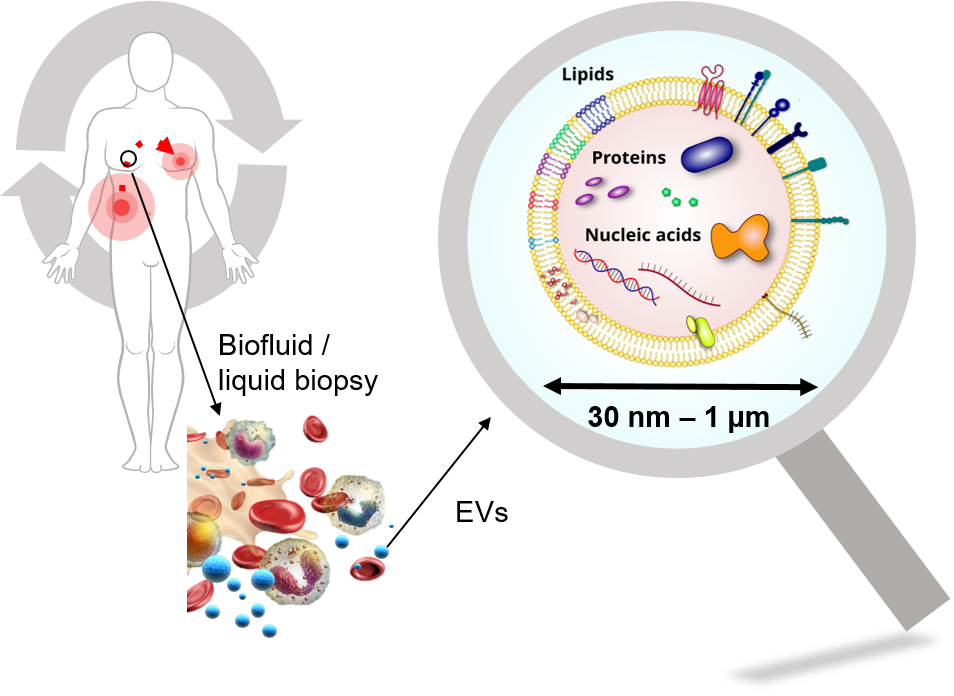
Extracellular vesicles (EV) are nanometric membrane delimited objects that are secreted by almost all cell type.
They are central to cell-to-cell communication and they can convey molecules like growth factors and nucleic acid from a secreting cell to a recepient cell in which they can induce biological modification.

EV have very promising therapeutic properties. When they are secreted by mesenchymal stem cell for instance, EV can recapitulate the regenerative properties of parental cells, offering a safer and simplier alternative to cell therapy. EV can have modulate the immune response, and they can be used for drug loading, like chemotherapeutic agent for example. EV are highly biocompatible and are known to have the potential to cross biological barriers and to target preferential sites towards inflamation for example. In a diagnosis/prognosis frame, the size, quantity or composition of EV can be modified by a pathology making EV promising diagnostic or prognostic probes naturally circulating in biofluids like blood, urine, milk, etc.
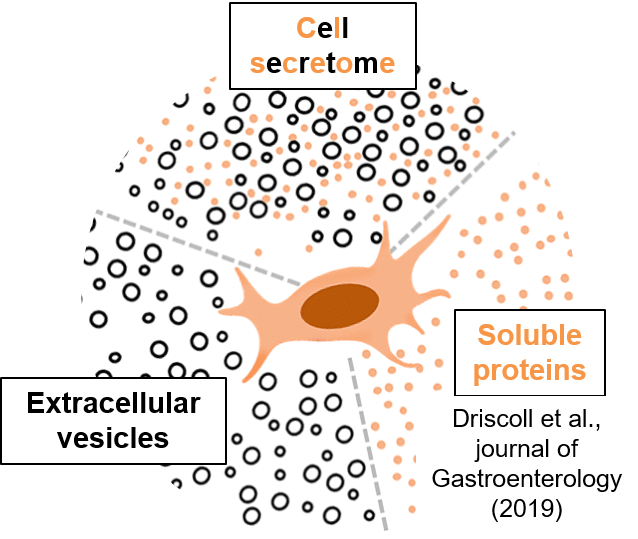
Complexity → EVs are contained in cell secretome, highly complex biofluids
Heterogeneity → EVs are heterogeneous in size, content, biogenesis and biological functions
Nanoscale → EVs are at the intermediate size range between cell and protein
The IVETh approach is multidisciplinary and relies on multimodal and multiscale techniques